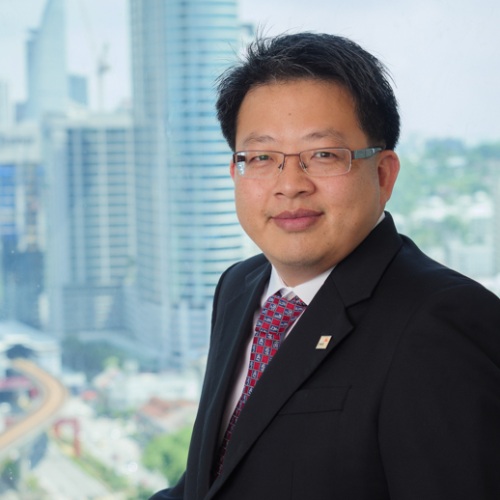
“Budget 2027 was a welcomed shift from the previous year’s approach. Whereas Budget 2026 largely refrained from introducing new revenue-raising measures, the fifth MADANI Budget goes a step further by putting money back into taxpayers’ pockets.”
Steve Chia
Tax Leader, PwC Malaysia
Feature Centre Stage: Budget 2027 overview
Dive into Budget 2027 as we summarise and discuss its provisions to spur economic growth and drive investments while safeguarding the wellbeing of the rakyat. Understand what impact the government's fiscal policy will have on businesses and industries, where the Malaysian economy is headed, and tax proposals as announced on 9 October.
The Budget tabling may be over, but the real questions begin now. Which tax measures require attention? What opportunities should businesses explore? And what do the announcements tell us about Malaysia’s economic direction? We put together some of the most common questions, and our tax specialists weighed in.
Personal tax reliefs “Budget 2027 has announced several personal tax changes. What does this actually mean for me?”
Michelle Chuo, Tax Partner
The good news is that many taxpayers may have a little more money left in their pockets. The basic personal relief will increase from RM9,000 to RM12,000, while middle-income taxpayers with chargeable income between RM70,001 and RM150,000 will benefit from a one-percentage-point reduction in tax rates.
The Budget also recognises that our needs change at different stages of life, whether we’re looking after ageing parents, welcoming a new baby, learning new skills, supporting our children’s education, using AI tools, having a pet, or simply staying active. The domestic tourism relief will also continue for YA 2027.
Corporate tax “What does Budget 2027 have in store for businesses?”
Taariq Murad, Tax Partner
What stands out is the continued use of targeted tax incentives to encourage investment in areas Malaysia wants to grow, rather than applying broad-based support. Done well, this can help Malaysia attract capital while deepening local capabilities and generating wider economic spillovers.
SMEs, however, are among the more immediate beneficiaries, with measures including a one-percentage-point income tax rate reduction and financing guarantees of up to RM32 billion. In our view, this is an important complement to the investment agenda: attracting capital matters, but strengthening the capacity of local businesses to grow alongside it is just as critical.
High-growth, high-value sectors “What does the Budget signal about Malaysia’s investment priorities?”
Patrick Tay, Deals Partner, Economics and Policy
The focus is shifting beyond attracting investment to building more capability at home. The government reported RM218.5 billion in approved investments in the first half of 2026, up 11.7% year-on-year, while government-linked investment companies are set to mobilise RM25 billion in domestic investment through GEAR-uP. The proposed investments in data centres, logistics, and semiconductors show where some of that capital is headed.
Penang is an example of this more targeted approach. Its positioning as Malaysia’s technology financial hub, backed by a RM100 million Strategic Investment Fund to support early-stage semiconductor and advanced manufacturing companies, signals an effort to strengthen regional industrial development. This is an opportunity to move from “made in Malaysia” to the new paradigm that is “made by Penang/Malaysia”—not just hosting investment and manufacturing products, but developing the companies, technology, and expertise behind them.
Green incentives “What is Budget 2027 doing to encourage companies to adopt green technology?”
Richard Baker, Tax Director, Sustainability and Climate Change
It extends and enhances green technology tax incentives until 31 December 2030. Companies undertaking qualifying green and sustainable technology projects—including EV charging stations or buying green technology assets for their own use—may qualify for an investment tax allowance of up to 100%.
From a business perspective, the longer timeframe provides more certainty when planning capital investments, while the allowance could help improve the economics of projects that are already being considered by companies.
Investment incentives “What are the key tax developments global firms should be watching?”
Lee Boon Siew, Tax Director
The government plans to enhance its Global Services Hub (GSH) incentives from 2027 onwards. New qualifying hubs could enjoy a 5% tax rate on income from GSH activities, while existing Principal Hub or GSH companies could receive the same rate on income above an established baseline. The exempted GSH income will also be expanded to prescribed treasury fund management activities.
This, coupled with the much longer incentive period, could be particularly attractive for global companies looking to centralise regional functions here, including treasury and fund management. And over time, the value of these incentives goes beyond attracting high-quality multinational investment. They could generate broader domestic spillovers by creating skilled jobs, developing local talent, and increasing demand for Malaysian professional and business services.
Tax Leader, Steve Chia and Deals Partner, Economics and Policy, Patrick Tay’s first reactions on BFM 89.9 Listen here
Register for our Budget 2027 seminar
What are the key measures announced in Budget 2027? Join our tax specialists and guest panellists for a practical, business-focused seminar on what the proposals from Budget 2027 may mean for you and your business.
If you no longer wish to receive this newsletter or future emails on similar topics, click here to update your subscription preferences. To unsubscribe from all PwC marketing communications, click here.